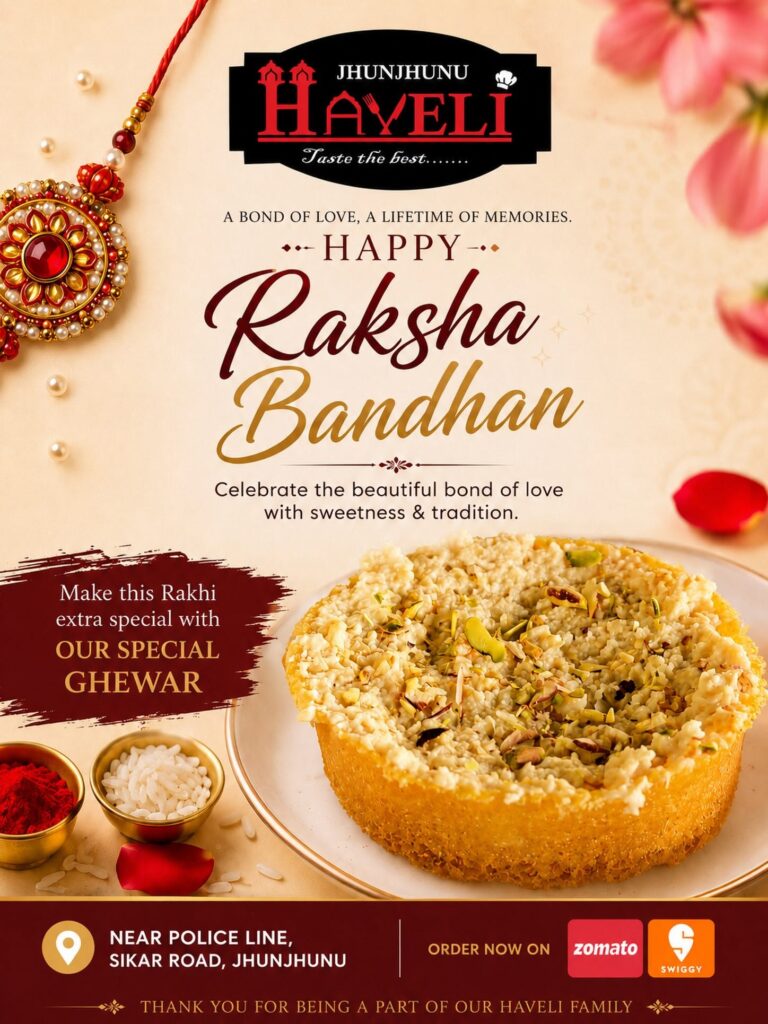
Every year, as the monsoon clouds start to clear over Delhi and Shravan Purnima draws near, one question starts doing the rounds in every Delhi household’s family group: “Ghewar mangwaya kya?” If you’re on the hunt for the best ghewar in Delhi this Raksha Bandhan, you’ve landed in exactly the right place.
When people talk about the best ghewar in Delhi, they’re usually talking about a small, trusted circle of halwais who’ve been perfecting this sweet for generations — and that’s exactly the list you’ll find below.
Ghewar isn’t just a sweet in this city — it’s a seasonal ritual. The lattice-like, honeycomb-textured disc soaked in sugar syrup and crowned with rabri or malai shows up on sweet shop counters the moment Sawan begins, and it disappears just as quickly once Rakhi is over. For the few weeks it’s around, Delhi’s oldest halwais turn it into an art form, and the city’s sweet-toothed crowd turns buying it into a full-blown expedition.
This guide rounds up the most-loved addresses for ghewar in Delhi — from century-old institutions in the by-lanes of Old Delhi to reliable modern chains — along with everything you need to know about the sweet itself, so your Raksha Bandhan thali is sorted this year. Pair it with our Raksha Bandhan gift guide if you’re sorting out rakhis and presents at the same time.
Table of Contents
What Makes Ghewar the Signature Sweet of Raksha Bandhan?
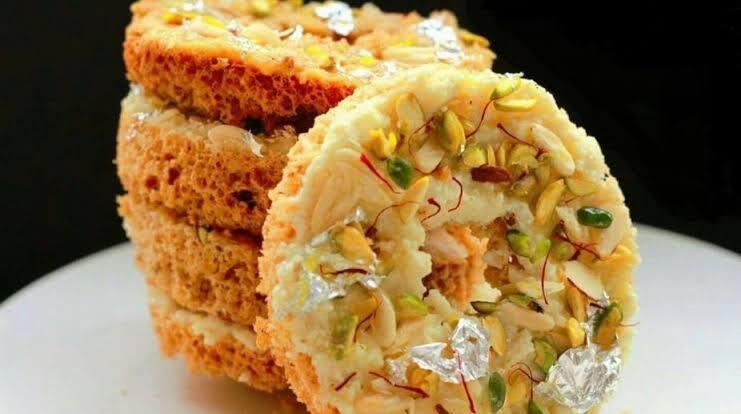
Ghewar is a disc-shaped sweet made by pouring a thin batter of refined flour (maida) into hot ghee in a rhythmic, circular motion, which is what creates its distinctive porous, honeycomb structure. Once fried to a golden crisp, it’s dunked in sugar syrup, allowed to soak, and then finished with toppings — anything from a simple dusting of silver varq to generous layers of malai, rabri, khoya, or kesar.
What makes it Raksha Bandhan’s unofficial mascot is timing as much as taste. Ghewar is a monsoon-season sweet, traditionally prepared from Sawan through Teej and right up until Rakhi, which usually falls in August. Because its shelf life is short and it genuinely needs the humid weather to taste right, sweet shops don’t sell it year-round — which is exactly why Delhiites treat the few weeks it’s available as an event in itself. Gifting a box of malai ghewar to your sibling on Raksha Bandhan has become as much a part of the day as tying the rakhi.
A Short History: How Ghewar Travelled from Rajasthan to Old Delhi
Ghewar’s roots trace back to Rajasthan, where it was originally made to celebrate Teej and Gangaur. Traders and halwai families who moved to Delhi carried the recipe with them, and over generations the city’s own sweet shops adapted it — adding North Indian touches like thick rabri, cardamom-scented malai, and dry fruit garnishes that you won’t always find in the original Rajasthani version. Today, Delhi has its own distinct ghewar culture, with certain Old Delhi shops so closely tied to the sweet that people travel across the city just to stand in their queues every August — part of why the debate over the best ghewar in Delhi gets so heated each festive season. If you’re new to Old Delhi’s food lanes, our Old Delhi street food guide is a good place to start planning your trip.
Why Delhi’s Ghewar Season Deserves the Hype
If you haven’t experienced it, it’s easy to underestimate how big a deal ghewar season is in Delhi. Old Delhi’s narrow lanes around Chandni Chowk turn into a slow-moving crowd of people carrying stacked pink and white cardboard boxes. Shops set up extra counters just for ghewar, halwais fry fresh batches through the day to keep up with demand, and regulars pre-book their favourite variants days in advance. It’s this mix of nostalgia, craftsmanship, and festive urgency that makes hunting down the best ghewar in Delhi such a satisfying (if slightly chaotic) tradition.
The Best Ghewar in Delhi for Raksha Bandhan: 7 Shops to Know
Here’s a closer look at where to find the best ghewar in Delhi this Rakhi season, and what makes each shop worth the trip.
1. Chaina Ram Sindhi Confectioners (Chandni Chowk)
If there’s one name that comes up first in every conversation about the best ghewar in Delhi, it’s Chaina Ram Sindhi Confectioners, tucked near Fatehpuri Chowk in Chandni Chowk. This legendary shop is best known for its melt-in-the-mouth malai ghewar, made using traditional methods and pure desi ghee that give it a rich, unmistakable flavour. Chaina Ram has built its reputation over decades on milk-based Sindhi sweets, and its ghewar counter is one of the busiest spots in Old Delhi through the festive season. If you only have time to visit one shop this Raksha Bandhan, this is the one locals will point you to.
Known for: Malai Ghewar, Karachi Halwa Best for: First-timers who want the “iconic Old Delhi ghewar experience”
2. Shyam Sweets (Chawri Bazaar)
A short walk from Chandni Chowk, Shyam Sweets in Chawri Bazaar is another Old Delhi institution with a loyal, multi-generational customer base. What sets this shop apart is how perfectly they balance texture — the ghewar here comes out crisp on the outside and beautifully syrup-soaked without turning soggy, which is harder to get right than it sounds. It’s a favourite among people who prefer the classic, traditional style of ghewar over the newer flavoured versions, and it’s often the second name that comes up right after Chaina Ram in any list of the best ghewar in Delhi.
Known for: Traditional crisp, syrup-soaked ghewar Best for: Purists who want the old-school taste
3. Kaleva (Gole Market & Other Branches)
Kaleva has been a fixture of Delhi’s festive sweets scene for a long time, and its Raksha Bandhan ghewar collection is one of the most extensive in the city. Alongside the Classic Plain and Malai versions, Kaleva also does a richer Kesar Malai Ghewar and regularly experiments with newer, contemporary twists on the sweet. With multiple branches across the city, it’s one of the more convenient options if you don’t want to make a special trip to Old Delhi, and it’s a solid pick if you’re comparing the best ghewar in Delhi under one roof rather than shop-hopping.
Known for: Wide variety — Plain, Malai, Kesar Malai, and festive specials Best for: People who want options under one roof
4. Bikanervala (Multiple Outlets)
For a dependable, widely available option, Bikanervala is hard to beat. With outlets across Delhi NCR, it’s the go-to for people who want good-quality, packaged ghewar without hunting through Old Delhi’s crowded lanes. Their festive range typically includes kesar, rabri, and dry-fruit-loaded variants, all consistent in quality across branches — useful if you’re buying gift boxes for multiple relatives. It’s consistently one of the easiest ways to grab the best ghewar in Delhi without planning a special trip.
Known for: Consistent quality, kesar and dry-fruit ghewar Best for: Last-minute shopping and gifting in bulk
5. Nathu’s Sweets (Bengali Market, Connaught Place)
Nathu’s is a Connaught Place favourite that’s better known for its chaat and Bengali sweets through most of the year, but come Sawan and Rakhi season, its ghewar counter draws its own crowd. It’s a convenient stop if you’re already in the CP–Bengali Market area and don’t want to travel all the way to Chandni Chowk, and it’s worth keeping on your radar when you’re mapping out the best ghewar in Delhi from a central location.
Known for: Ghewar paired with rich rabri Best for: Central Delhi shoppers
6. Bengali Sweet House (Bengali Market)
One of the oldest sweet shops in the capital, Bengali Sweet House has been serving Delhi since 1937. While it’s famous year-round for its chaat and Bengali sweets, it adds ghewar to its counters during the monsoon festive stretch, made in pure ghee like the rest of its offerings. The shop is always busy, but the quick service keeps queues moving.
Known for: Heritage sweets made in pure ghee Best for: Combining a sweets run with a chaat craving
7. Gulab Sweets (Pitampura and Other Outlets)
Slightly off the usual Old Delhi–CP circuit, Gulab Sweets in Pitampura is a strong pick for North Delhi residents. Known primarily for gur patti, rewari, and ladoos made from pure desi ghee, the shop also puts out a well-regarded ghewar during the monsoon season that regulars specifically wait for.
Known for: Desi ghee sweets, seasonal ghewar Best for: North Delhi and Rohini-area shoppers
Types of Ghewar You’ll Find in Delhi This Rakhi Season
Not all ghewar is the same, and part of the fun of tracking down the best ghewar in Delhi is picking the variant that suits your taste:
- Plain Ghewar: The classic version — crisp, lightly syrup-soaked, and topped simply with chopped pistachios or silver varq. Best if you want the pure texture without heavy toppings.
- Malai Ghewar: The most popular festive choice, topped with thick, sweetened cream. This is what most shops mean when they advertise their “special” ghewar.
- Rabri Ghewar: Similar to malai but topped with reduced, slow-cooked milk (rabri), giving it a denser, richer bite.
- Mawa/Khoya Ghewar: Made using khoya in the batter or topping, resulting in a denser, more indulgent sweet.
- Kesar Ghewar: Malai or rabri ghewar infused with saffron, giving it a golden colour and a distinct aroma — usually a little pricier.
- Dry-Fruit Ghewar: Loaded with chopped almonds, pistachios, and cashews, a popular choice for gifting.
How to Choose the Best Ghewar in Delhi: Freshness Tips
A few pointers to keep in mind while you’re shop-hopping, so you actually come home with the best ghewar in Delhi this season:
- Check the base first. A well-made ghewar should have a visibly honeycombed, lacy texture all the way through — not a dense, flat disc.
- Smell before you buy. Fresh ghewar made in pure ghee has a distinctly nutty, rich aroma. If it smells flat or overly sugary, it’s likely been sitting around too long.
- Ask when it was fried. Because of the short shelf life, shops that turn over stock quickly (like the Old Delhi favourites above) tend to have the freshest batches, especially earlier in the day.
- Go easy on the toppings if you’re planning to travel far. Malai and rabri toppings don’t hold up as well in Delhi’s August heat over long journeys — plain ghewar with toppings added just before serving travels better.
- Buy close to the date. Ghewar is best eaten within a day or two of purchase, so resist the urge to stock up a week in advance.
Tips for Buying and Storing Ghewar Before Raksha Bandhan
Since Raksha Bandhan crowds can turn Old Delhi’s lanes into a bit of a maze, a little planning goes a long way toward actually getting the best ghewar in Delhi instead of settling for whatever’s left on the counter. For more festive food-hunting tips, see our Delhi festive food guides.
- Go early. Shops like Chaina Ram and Shyam Sweets see their heaviest rush in the two to three days right before Rakhi. Visiting a few days ahead, or early in the morning, means shorter queues and fresher stock.
- Refrigerate malai and rabri versions. If you’re not eating it the same day, keep cream- or rabri-topped ghewar refrigerated and bring it to room temperature before serving so the syrup doesn’t turn hard.
- Keep plain ghewar in an airtight container at room temperature for a day or two if it doesn’t have a cream topping.
- Pre-order for large quantities. If you’re buying for a big family gathering, most of these shops accept advance orders — worth calling ahead during peak season.
Pairing Ghewar with Your Raksha Bandhan Celebrations
Ghewar is rich, so it’s traditionally served in modest portions alongside the rest of the Rakhi spread. A classic combination is to serve a small malai or rabri ghewar alongside besan ladoo or a milk-based mithai, so the meal doesn’t feel one-note sweet. Many families also gift ghewar in decorative boxes alongside dry fruits or a rakhi thali — a small nod to how deeply this seasonal sweet is woven into the festival itself.
Frequently Asked Questions
Where can I find the best ghewar in Delhi for Raksha Bandhan? Chaina Ram Sindhi Confectioners and Shyam Sweets in Old Delhi are usually named first, alongside Kaleva, Bikanervala, Nathu’s Sweets, Bengali Sweet House, and Gulab Sweets. Each has its own take on malai, rabri, and kesar ghewar, so the “best” one often comes down to whether you prefer the Old Delhi classics or a more convenient neighbourhood option.
Which is the most famous shop for ghewar in Delhi? Chaina Ram Sindhi Confectioners in Chandni Chowk is widely regarded as one of Delhi’s most iconic addresses for ghewar, especially its malai version, though Old Delhi has several other well-loved options nearby, including Shyam Sweets in Chawri Bazaar.
Is ghewar available in Delhi all year round? No. Ghewar is a seasonal sweet, typically available from Sawan through Teej and Raksha Bandhan, roughly across the monsoon months. Most shops stop making it once the festive season ends.
What’s the difference between malai ghewar and rabri ghewar? Malai ghewar is topped with sweetened, thickened cream, while rabri ghewar uses slow-cooked, reduced milk as the topping. Rabri versions tend to be denser and richer.
How long does ghewar stay fresh? Plain ghewar without toppings can last a couple of days at room temperature in an airtight container. Once malai, rabri, or khoya toppings are added, it’s best consumed within a day and should be refrigerated if not eaten immediately.
Is ghewar only eaten on Raksha Bandhan? Not only — it’s also associated with Teej and Gangaur — but Raksha Bandhan is when demand peaks in Delhi, with most shops seeing their busiest ghewar sales in the days leading up to the festival.
Final Thoughts
Whether you make the trip to the crowded, nostalgia-soaked lanes of Chandni Chowk for a Chaina Ram malai ghewar, or pick up a reliable box from your nearest Bikanervala, the search for the best ghewar in Delhi is as much a part of Raksha Bandhan as the rakhi itself. However you narrow down the best ghewar in Delhi for your family this year, the one rule holds: buy fresh, buy close to the date, and let this one honeycombed, syrup-soaked sweet do what it’s done in Delhi for generations — bring siblings a little closer, one bite at a time.